CRO —
step-level funnels, hypotheses with success criteria, and honest tests
From first click to goal: where users leave, what breaks forms and payments, and what Metrica/GA4 actually shows. Expect a prioritized backlog, statistical discipline for A/B, and alignment with SEO and paid — not a weekly "winner" on noisy data.
Why traffic growth doesn't become lead growth
1
The funnel isn't measured step-by-step
You have a counter and an «average conversion», but not where 60% of users leave. Decisions rely on guesses.
2
Form and checkout friction without priority
Extra fields, unclear errors, no autosave, poor mobile keyboards. Users bounce before you finish reading the report.
3
A/B tests without a hypothesis or power
Headlines change weekly with no segment, seasonality, or variance control. The «winner» is random and doesn't replicate.
4
UX and copy misaligned with intent
Commercial queries land on pages with no offer or trust; informational pages get aggressive sales blocks. Conversion suffers despite solid SEO.
What's included in CRO engagement
From first click to goal: where users leave, what breaks forms and payments, and what Metrica/GA4 actually shows. Expect a prioritized backlog, statistical discipline for A/B, and alignment with SEO and paid — not a weekly "winner" on noisy data.
Funnel & event map
Goal audit or setup, e-commerce events, micro-conversions; shared definitions for lead and order.
- CRM and offline conversion alignment
- Segments by source and device
- Duplicate and false-positive control
Qualitative UX review
Sessions, mobile flows, forms and checkout — a prioritized friction list.
- Field errors and input masks
- Shipping and payment in e-commerce
- Screenshots and flows for engineering
Hypothesis backlog
ICE/PIE or your model; sprint queue with risk notes.
- Success criteria before launch
- Design and backend dependencies
- Ethics and consent for experiments
A/B & multivariate
Design, runtime, split, readout; your stack (VWO, CMS, feature flags).
- Power checks on baseline CR
- Seasonality and promos under control
- Rollback on failure
Copy & trust
Offer, social proof, FAQ, objections at bottleneck steps.
- Tone-of-voice alignment
- Fit with SEO copy without conflict
- Microcopy at the form
Impact reporting
Before/after by segment, controls where feasible, winner knowledge base.
- Log in Notion/Confluence
- Tie to revenue, not only CR
- Cycle retrospectives
Speed & INP
How CWV affects form and cart drop-off — hypotheses with engineering.
- Field metrics and lab checks
- Third parties and trackers
- Regression after releases
SEO & paid alignment
Separate landings and events for organic, brand, and campaigns — no cloaking.
- Bot vs user visibility in tests
- Canonicals and indexable variants
- Sync with the media plan
Data-led CRO: hypothesis → change → verify
I combine qualitative review (sessions, forms, flows) with quantitative funnels in Metrica or GA4. Every change is a testable hypothesis with a success criterion and risk assessment — focused on durable conversion and revenue lift, not one-off spikes.
Diagnose the bottleneck first — Build the funnel from real events and URLs, find the step with the largest drop. Only then tackle design and copy.
Small, safe experiments — Prefer sequential A/B or quasi-experiments with data quality controls instead of a full layout «revolution» with no rollback.
Aligned with SEO and paid — Respect source and intent: separate paths for organic, brand, and paid so relevance isn't traded for conversion blindly.
How the work is structured
Funnel snapshot → test plan → production iterations → handoff and playbook.
Step 1
Snapshot
Funnel audit, goals, forms, and landings; baseline metrics and segments. Outcome: Bottleneck map and quick fixes without A/B.
Step 2
Test plan
Hypothesis backlog, first A/Bs, tooling and experiment ethics. Outcome: A 4–8 week queue of verifiable changes.
Step 3
Iterations
Run, analyze, ship winners; align with product and marketing releases. Outcome: Compounding CR and revenue with a clear decision log.
Step 4
Handoff
Winner documentation, test cadence, team training. Outcome: Repeatable experiment loops without hero-mode dependency.
Personal
The expert who runs the work
No hiding behind a sales team: priorities, reviews, and straight answers—from strategy through reporting.
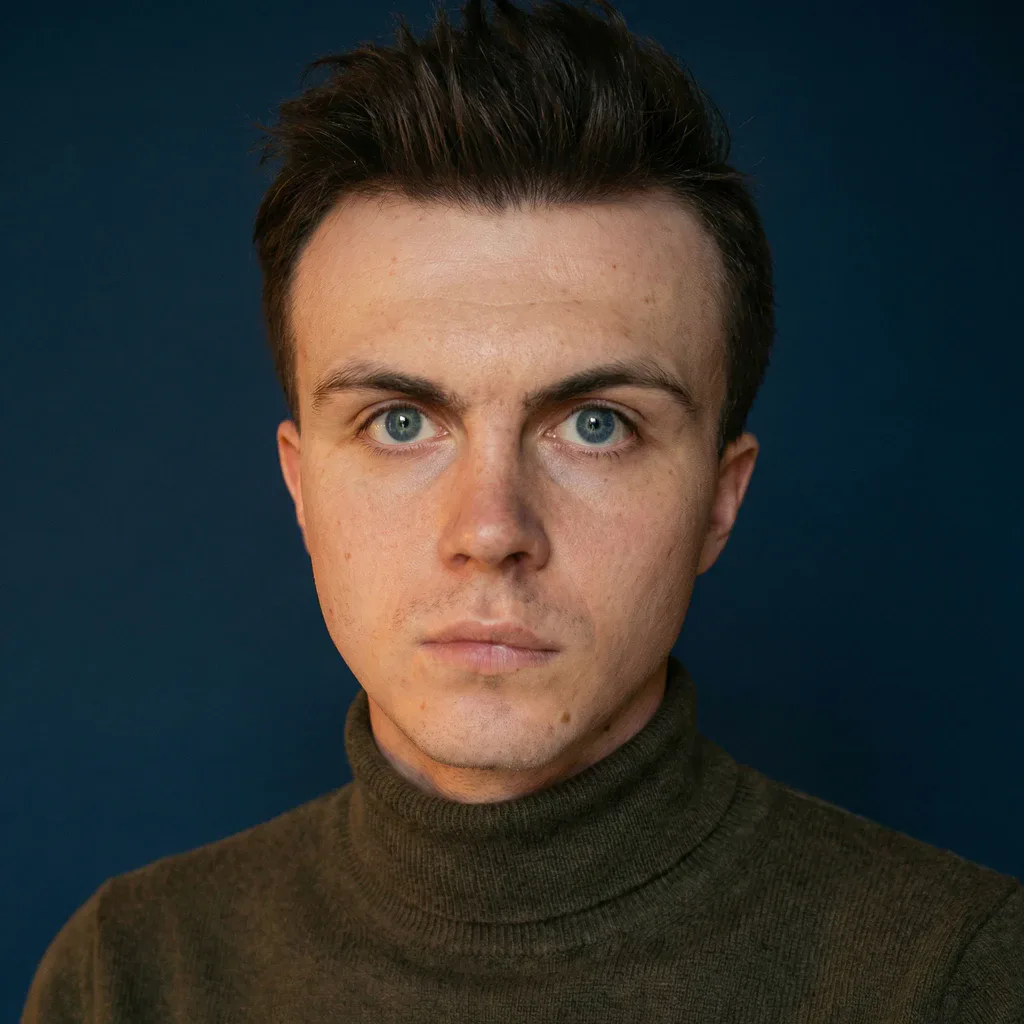
SEO Strategist
Pavel Barushka
Head of SEO @ Texode · Minsk / hybrid
SEO strategist with an engineering mindset. I lead projects from zero launch to scaling high-load platforms: JS/SPA, subdomains, multilingual and multiregional websites. Technical audits, indexation strategy, semantics and structured data are in my scope.
Frequently Asked Questions
Want more leads from the same traffic?
Let's align on a funnel snapshot and first hypotheses — with impact and risk spelled out.
Free initial consultation