B2B SEO —
semantics, expert content, and a funnel for the buying committee
Not reach for vanity metrics — narrow queries, industry language, and 2–6+ month cycles. Content serves roles (engineer, procurement, executive): ToFu through to RFP. Grounded in ICP, standards, and E‑E‑A‑T: facts, methodology, authors, and data‑backed cases.
Why «volume» SEO underperforms in B2B with long cycles
1
Narrow queries with high CPC
Mass‑traffic approaches don't pay off: volume is low, and the cost of a bad lead is too high.
2
3–5 people decide
Engineers, procurement, and C‑level look for different things. Content must prove technical competence and economic benefit at the same time.
3
Tools miss industry‑specific semantics
Queries based on GOSTs, part numbers, catalogs, and internal slang aren't captured automatically — the core must be mined from tenders, LPR data, and engineer interviews.
4
Generic content doesn't build trust
Shallow articles without evidence, methodology, or references to standards won't convince an expert audience. Without Google E‑E‑A‑T, growth hits a ceiling.
What's included in B2B SEO
Not reach for vanity metrics — narrow queries, industry language, and 2–6+ month cycles. Content serves roles (engineer, procurement, executive): ToFu through to RFP. Grounded in ICP, standards, and E‑E‑A‑T: facts, methodology, authors, and data‑backed cases.
Niche professional semantics
Clusters by role (engineer, procurement, executive): validation via tenders, catalogs, standards, and interviews — not only generic SEO tools.
- Industry glossary mapped to search demand
- Cluster priorities by deal cycle and margin
- Query mapping to existing URLs and product lines
Authority content
Whitepapers, technical guides, data‑backed cases, comparison tables — aligned to funnel stages and real procurement objections.
- Credibility patterns: methodology, diagrams, standard references
- Editorial guidelines for in‑house experts
- Internal links across ToFu / MoFu / BoFu
Whitepapers & long form
Search‑ and promo‑ready packaging for long assets: outlines, excerpts, download landings, E‑E‑A‑T signals.
- H2–H4 structure for intent and snippets
- Legal wording review where needed
- Micro‑conversions: download, webinar, demo
LinkedIn & multichannel
Repurpose SEO assets into posts, articles, and carousels for LinkedIn and industry outlets — with UTMs and consistent messaging.
- Editorial calendar built on published clusters
- Links to nurturing and retargeting
- One tone of voice for site and executive‑facing social
Commercial pages & on‑site funnel
MoFu/BoFu landings: comparisons, TCO/ROI calculators, “why us” blocks, forms and CTAs per deal stage without pushy “buy now” copy.
- CTAs aligned with CRM fields and qualification
- A/B hypotheses for key commercial URLs
- Tie‑ins to offline events and tenders when relevant
Technical trust signals
Template speed for catalogs and long reads, crawl/index health, baseline structured data, clean IA — so expert content indexes and converts.
- Technical checklist for large catalogs and PDFs
- Control of duplicates and parametric series
- Release coordination with engineering
How B2B SEO works: expertise over volume
I start from the ideal customer profile and search patterns, not Ahrefs reports. The content funnel is built to cover informational and commercial intent at every decision‑making level.
Professional semantics — Manual and semi‑automated mining of narrow queries: technical terms, abbreviations, GOSTs, part numbers. The keyword core is shaped for ICP, not generic reach.
Authority Content — Whitepapers, data‑backed case studies, technical guides, comparison tables. Every asset strengthens E‑E‑A‑T: authors, facts, methodology, links to standards.
Full‑funnel from awareness to RFP — ToFu — educational content for engineers; MoFu — comparisons and ROI calculators; BoFu — commercial landing pages with ROI projections and RFP triggers.
Multichannel support — Organic is the foundation, but SEO content supplies materials for LinkedIn, industry media, and retargeting, helping nurture leads and internal approvals.
Work process
From customer profile and search patterns to a keyword core and content for every funnel stage — no fluffy text for the sake of volume.
Step 1
ICP Mapping
Buyer persona → search patterns: roles (engineer, procurement, director), typical pain points, search triggers, industry language. This forms the basis for clusters and release priorities. Outcome: A document with role profiles and their search scenarios.
Step 2
Semantics
Professional slang + technical queries: demand validation, clustering, alignment with current site structure and internal products. Outcome: Keyword core tagged by funnel stage and decision‑maker role.
Step 3
Content
Expert materials for each funnel stage, unified tone of voice, reinforced credibility (figures, diagrams, standards references). Measurement includes not only traffic but also qualified leads and key‑page engagement. Outcome: Content package for launch and a regular publishing plan with KPIs.
Results examples
B2B pumping equipment catalog: technical SEO, silo structure, 3000+ product cards, organic growth after bot filtering.
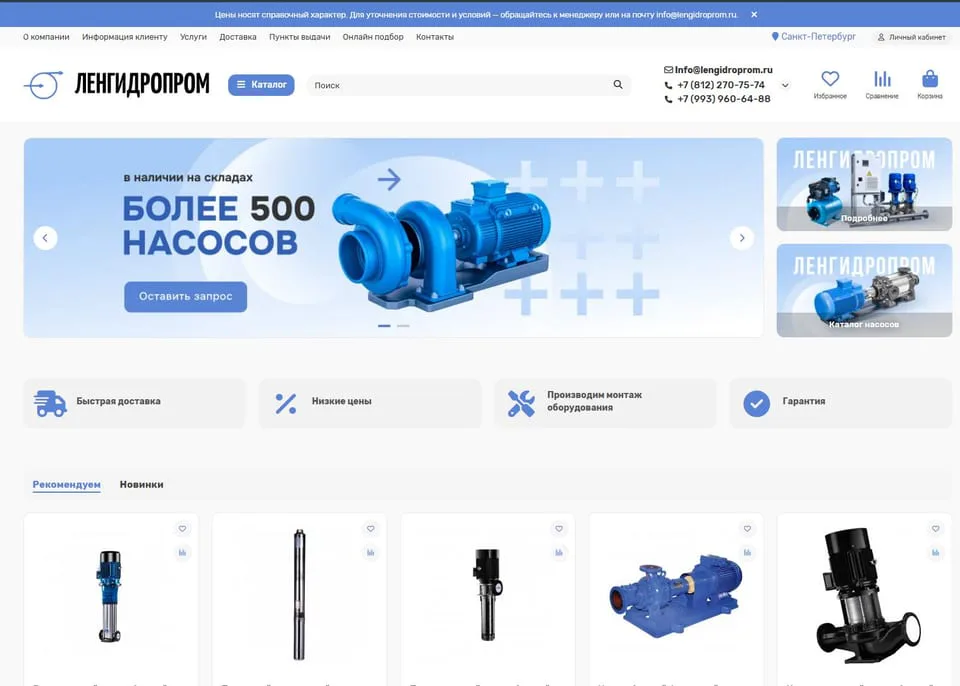
lengidroprom.ru
An OpenCart pumping equipment catalog: template redesign, bot filtering, silo architecture, trust factors and standardization of 3000+ product cards.
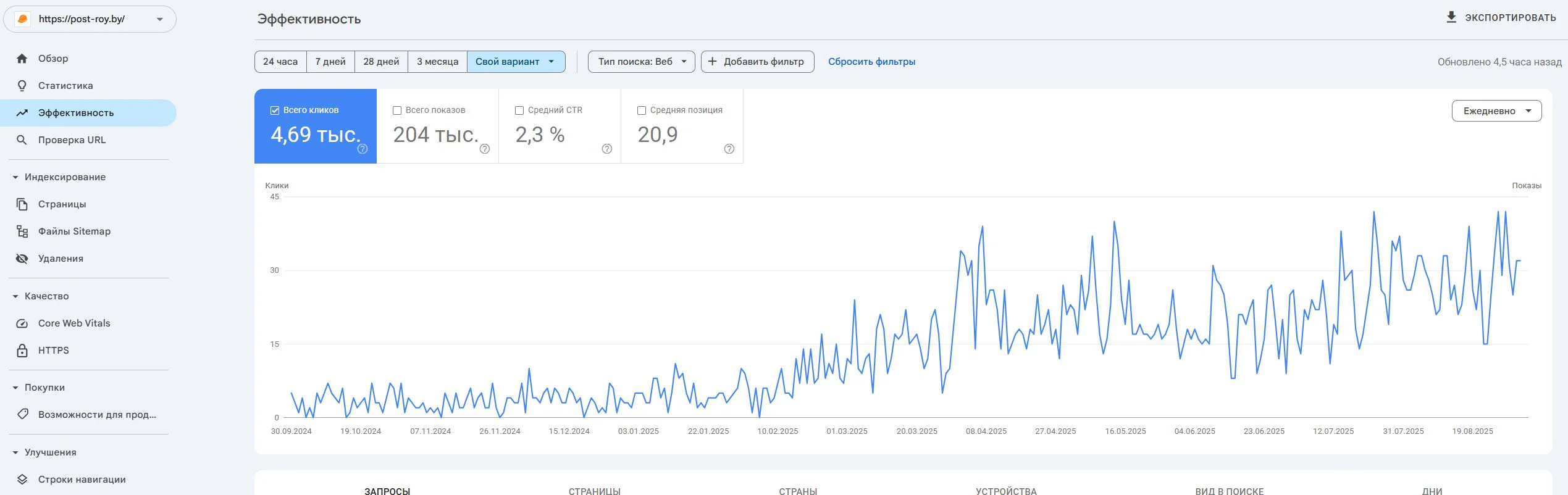
Post-Roy
A construction services website for industrial floors and screed. The project started from zero: no site, no domain, no digital reputation.
Personal
The expert who runs the work
No hiding behind a sales team: priorities, reviews, and straight answers—from strategy through reporting.

SEO Strategist
Pavel Barushka
Head of SEO @ Texode · Minsk / hybrid
SEO strategist with an engineering mindset. I lead projects from zero launch to scaling high-load platforms: JS/SPA, subdomains, multilingual and multiregional websites. Technical audits, indexation strategy, semantics and structured data are in my scope.
Frequently asked
Ready to build systematic B2B traffic?
Order an audit or let’s discuss how B2B SEO can systematically bring qualified leads into your long sales cycle.
Including a free initial consultation