Competitive intelligence —
SEO without illusions
Competitor analysis isn’t just another table — it’s reconnaissance before keyword mapping and content work. We identify who actually wins clicks in your niche and unpack queries, pages, backlinks, and internal logic. You get more than raw Ahrefs exports: a prioritized backlog of where to close keyword/content gaps, which donors to pursue, and which formats must match the top-ranking benchmark.
What's holding back your competitive edge
1
Comparing against the wrong players
Offline competitors or brands that don't fight you in SERP. Real click loss often comes from marketplaces, aggregators, and niche sites you never track.
2
Guessing the keyword gap
Scattered queries without knowing which clusters drive commercial traffic versus which only inflate the content budget.
3
Blind to link opportunities
Leaders earn links from thematic donors you’ve never mapped. Legitimate outreach is missed when you don’t see who links to the top players.
4
Content below niche standards
Articles and landing pages lose on depth, structure, and proof. It’s unclear which trust blocks and formats are now table stakes in the top 10.
What's included
Competitor analysis isn’t just another table — it’s reconnaissance before keyword mapping and content work. We identify who actually wins clicks in your niche and unpack queries, pages, backlinks, and internal logic. You get more than raw Ahrefs exports: a prioritized backlog of where to close keyword/content gaps, which donors to pursue, and which formats must match the top-ranking benchmark.
Keyword gap & cluster prioritization
Where competitors have strong URLs and you have a gap or a weak page.
- Mapped to your current URL set and commercial priorities
- A matrix of quick wins / mid-term / strategic plays by cluster
- Filtering queries without realistic intent for your funnel
Link gap & donor map
Who links to leaders but not to you — filtered for quality and topical fit.
- Segments: media, industry sites, partners, directories
- Excluding toxic and obviously manipulative sources
- Draft angles for outreach and content that fits donors
Content benchmarking & page templates
Top documents dissected: structure, depth, media, E-E-A-T signals.
- Checklists for commercial vs informational page types
- Gap analysis versus your templates by site section
- Ready prompts for copywriters and designers
Traffic estimation & leader share
Niche scale and realistic upside — with tool methodology spelled out.
- Summary of visibility share for key domains
- What-if scenarios for content or link investment
- Caveats on third-party organic estimates
Real SERP competitor identification
Who fights for your clusters — including aggregators and grey-area players.
- 3–7 domains with SERP-overlap rationale
- Separating offline brands with no meaningful organic presence
- List sign-off with you before deep reverse engineering
SERP features & intent mapping
How results look for priority clusters: modules, video, FAQ, local packs.
- Intent map and result types by cluster
- Where rich formats matter vs classic blue-link targets
- Implications for content prioritization
Technical & architecture patterns
Recurring leader choices: URL templates, internal linking, indexation of sections.
- Crawl patterns and depth signals where observable
- What’s portable to your stack without blind 1:1 copying
- Flagging risky tactics you shouldn’t repeat
Backlog, roadmap, and handover format
Deliverables as spreadsheets, an exec deck, and tasks ready for your tracker.
- Priorities with effort sizing and cross-team dependencies
- Executive summary plus a practitioner-deep layer
- Optional monthly gap monitoring playbook
Four intelligence layers instead of one export dump
We don’t export “every overlapping domain” or chase vanity DR. The work runs along four axes — each becomes team tasks, not an abstract report.
Keyword Gap — Clusters and queries where competitors rank and you lack a strong URL or coverage. Priority goes to commercial relevance and real demand — not an endless long-tail grab bag.
Link Gap — Donors that link to niche leaders but not to you. A list for legitimate outreach and partnerships — relevance and quality first, not junk farms.
Content Benchmarking — How strong SERP pages are built: outline, depth, media, internal links, trust blocks. Not copy-paste — a niche-standard map for templates and writer briefs.
Traffic Estimation — Organic estimates via Ahrefs/Semrush as market context: niche scale, leader share, realistic ceiling for your scenarios. Numbers include methodology caveats — no fantasy guarantees.
How the work is structured
Mixing offline rivals with real SERP players derails strategy. Four steps from domain shortlist to roadmap.
Step 1
Identification
3–7 domains competing for your clusters, plus grey players (aggregators, marketplaces). We align the list so comparisons stay apples-to-apples. Outcome: An agreed list of real SEO competitors.
Step 2
Reverse engineering
Semantics, pages, links, and technical patterns: what leaders repeat, where advantage shows, gaps between snippet promise and on-page delivery. Outcome: A map of competitor strengths and weaknesses.
Step 3
Opportunities
A matrix of quick wins / mid-term bets / content vs link focus tailored to your resources. Clear callouts on what not to copy (grey tactics, spam, low-ROI paths). Outcome: A prioritized backlog.
Step 4
Packaging & handover
Final tables, a walkthrough deck, optional team workshop. We align on monitoring or the next analysis cycle. Outcome: A roadmap in a format your team can execute immediately.
Results examples
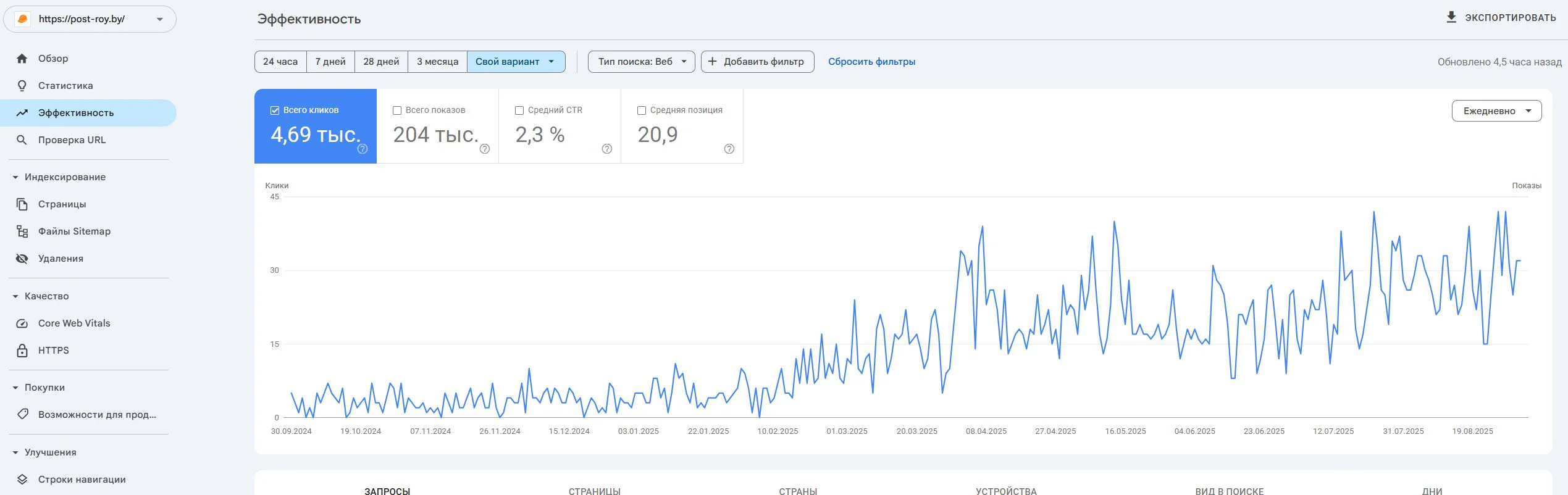
Post-Roy
A construction services website for industrial floors and screed. The project started from zero: no site, no domain, no digital reputation.
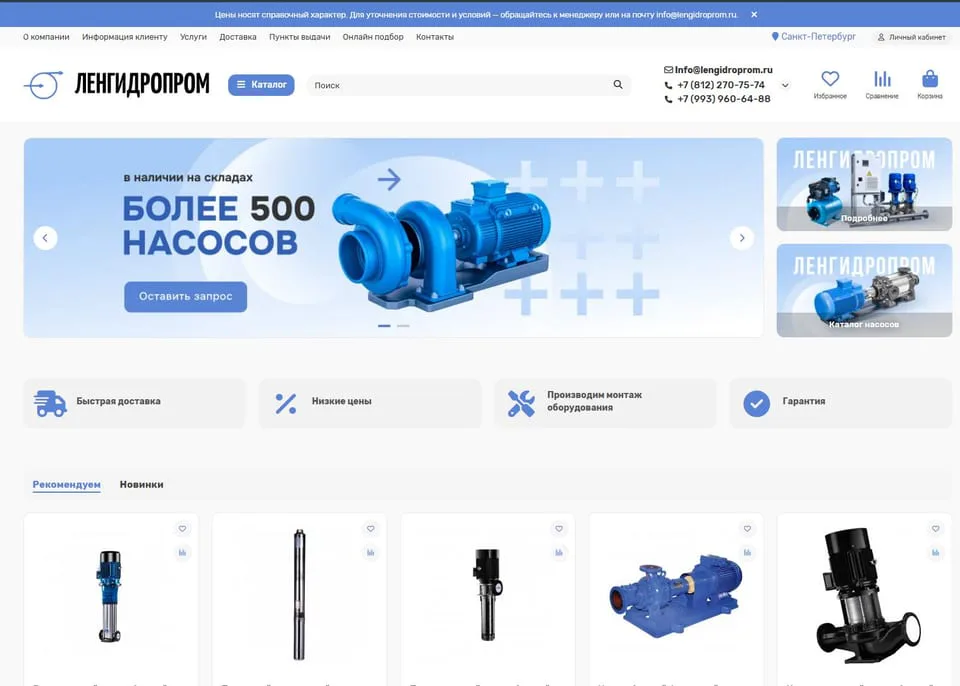
lengidroprom.ru
An OpenCart pumping equipment catalog: template redesign, bot filtering, silo architecture, trust factors and standardization of 3000+ product cards.
Personal
The expert who runs the work
No hiding behind a sales team: priorities, reviews, and straight answers—from strategy through reporting.

SEO Strategist
Pavel Barushka
Head of SEO @ Texode · Minsk / hybrid
SEO strategist with an engineering mindset. I lead projects from zero launch to scaling high-load platforms: JS/SPA, subdomains, multilingual and multiregional websites. Technical audits, indexation strategy, semantics and structured data are in my scope.
Frequently asked
Ready to see your niche without illusions?
Discuss competitor analysis and a backlog format that fits your team and release cadence.
Including a free initial consultation