Google Search Console —
from reports to a backlog: CTR, 8–20, indexing, and CWV with priorities
Exports and slices (page/template, country, device), tied to crawl logs when needed. You get sprint-ready tasks and KPIs — not a deck that says "everything is bad."
Why GSC data sits idle
1
Low CTR even at top positions
Your pages rank well but clicks are poor. Title and Description don't grab attention, leaving traffic on the table.
2
Positions 8–20 are stuck
Pages hover on page two. A single targeted content or meta-tag tweak can push them into the top 5.
3
Indexing stalls
'Discovered – currently not indexed' stacks up, crawl budget wastes away, and new pages wait months.
4
Core Web Vitals in the red
GSC field data shows poor metrics, but you don't know which templates are dragging you down or what to fix first.
What's included in GSC work
Exports and slices (page/template, country, device), tied to crawl logs when needed. You get sprint-ready tasks and KPIs — not a deck that says "everything is bad."
CTR & snippet
Search Analytics API exports, CTR vs position benchmarks, hypotheses for titles/descriptions and on-page blocks.
- Slices by page type and intent
- Compare with live SERP snippets
- Queued A/B for meta without chaos
Positions 8–20
High-demand URLs near the top and targeted content/structure tweaks.
- Priority by impressions × distance to top
- Tie-in with internal linking
- Post-release checks
Indexing & Coverage
Statuses, excluded, soft 404, canonical; patterns behind bulk drops.
- Patterns by template and parameters
- Alignment with sitemap and robots
- Validation and recrawl plan
Crawl Stats & limits
Crawl volume, response codes, host — where crawl meets no useful response.
- Optional log file cross-check
- CDN/server bottlenecks
- Crawl priority recommendations
Core Web Vitals by template
Group CWV URLs by page type and template.
- GSC field data as the baseline
- PSI/Lab when hypotheses need lab signals
- Front-end and CMS fix queue
Slices: country, device, URL sets
Performance dimensions: where clicks and impressions diverge from expectations.
- Desktop vs mobile comparison
- URL prefixes and subdomains
- Hreflang alignment for multi-region
Manual actions & alerts
Security issues, manual actions, enhancements — checks and routing to owners.
- Post-migration checklist
- Critical message monitoring
- Scheduled pulls via Search Console API
Plan, KPIs, and handoff
Task table with impact and dates; optional monitoring playbook and report templates.
- Sheets/Looker exports by agreement
- Team training (optional)
- Cycle retros after rollout
From GSC data to a prioritized backlog
No report tourism — insights become tasks: Search Analytics API, Coverage, Crawl Stats, and CWV, prioritized by impact on clicks and indexation.
CTR & snippet — Pages underperforming CTR for their position; hypotheses on titles/descriptions, snippet structure, and intent match.
Positions 8–20 — URL clusters near the top: where a small move yields meaningful clicks; prioritized by demand and template.
Indexing & crawl — Coverage plus Crawl Stats: causes of "discovered – not indexed", overspending, response errors; a fix plan and trend checks.
How the work is structured
Loop: baselines → priorities → tasks → post-release control.
Step 1
Data audit
GSC for 3–6 months: CTR baselines, positions, indexing, CWV. Outcome: Summary of starting metrics and focus zones.
Step 2
Anomalies & opportunities
CTR gaps, 8–20, Coverage/Crawl, CWV by template — ranked by impact on clicks and indexation. Outcome: Prioritized hypothesis and issue list.
Step 3
Recommendations
Concrete actions: meta, content, technical fixes; ready for GSC validation where applicable. Outcome: Task table with deadlines and expected impact.
Step 4
Implementation & control
Rollout support, dashboards/exports for tracking; tactic tweaks from fresh data. Outcome: CTR gains and cleaner indexation with transparent reporting.
Example results
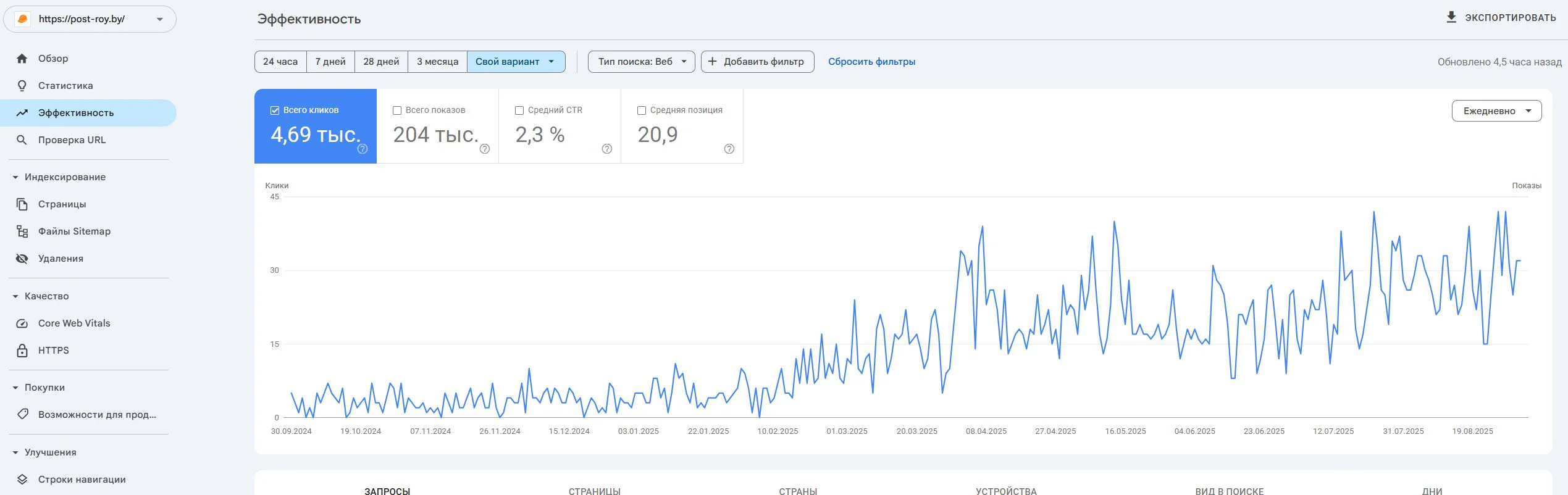
Post-Roy
A construction services website for industrial floors and screed. The project started from zero: no site, no domain, no digital reputation.
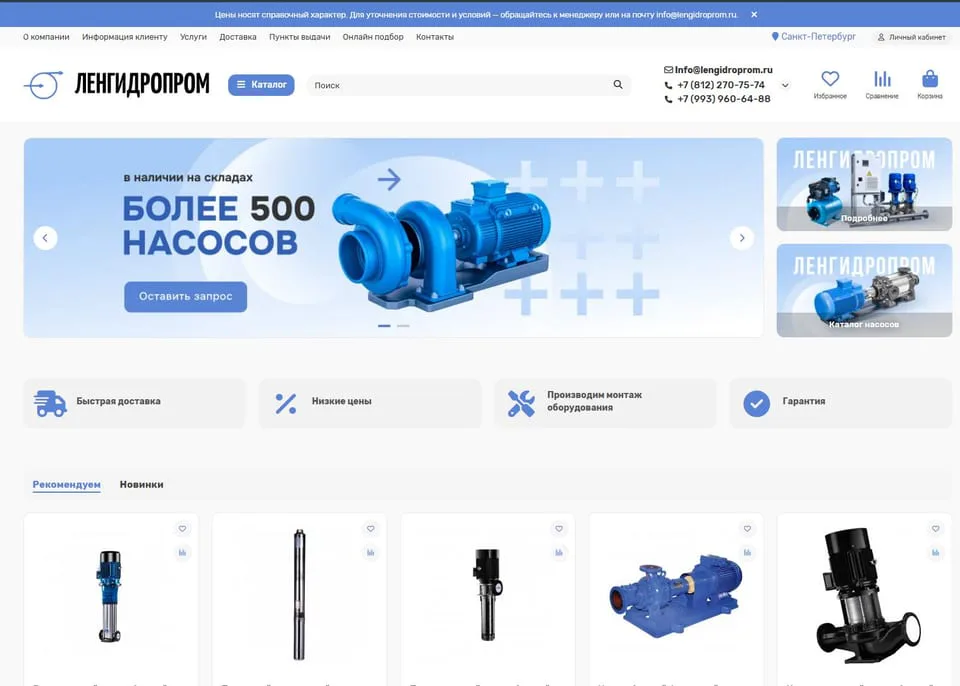
lengidroprom.ru
An OpenCart pumping equipment catalog: template redesign, bot filtering, silo architecture, trust factors and standardization of 3000+ product cards.
Personal
The expert who runs the work
No hiding behind a sales team: priorities, reviews, and straight answers—from strategy through reporting.

SEO Strategist
Pavel Barushka
Head of SEO @ Texode · Minsk / hybrid
SEO strategist with an engineering mindset. I lead projects from zero launch to scaling high-load platforms: JS/SPA, subdomains, multilingual and multiregional websites. Technical audits, indexation strategy, semantics and structured data are in my scope.
Frequently Asked Questions
Ready to turn Search Console into a growth tool?
Let's align scope: from a one-off review to an audit with backlog and post-release control.
Free initial consultation