Web / SEO‑driven dev —
URL architecture, SSR/SSG, semantics, Schema.org, and CWV in the spec — not post‑launch patches
Front and back shaped so crawlers get predictable HTML, canonicals stay consistent, and CWV plus mobile parity are checked on every major template before production. Structured data lives in templates and data — not bolted on after go‑live.
Why does «layout first, SEO later» create tech debt and indexation risk?
1
SEO added after launch
A polished front‑end is done, then come the patches: rewriting URLs, retrofitting markup, fixing indexation errors.
2
Platform isn’t search‑engine ready
SSR/SSG not configured for React/Next, canonicals fighting each other, robots.txt blocking important sections.
3
Mobile pages lose out
Content hidden behind accordions, unique text only on desktop, touch elements aren’t friendly. Mobile‑First Indexing suffers.
4
«Eyeballing» performance
Core Web Vitals weren’t measured pre‑launch; LCP is red everywhere except the homepage. Performance wasn’t a priority.
What’s included in SEO‑Driven Development
Front and back shaped so crawlers get predictable HTML, canonicals stay consistent, and CWV plus mobile parity are checked on every major template before production. Structured data lives in templates and data — not bolted on after go‑live.
CWV & critical path
LCP/INP/CLS profiling per template, lazy‑load with rules, static caching and font policy — not just a green homepage in Lighthouse.
- Lab vs field signals after rollout
- Budgets for heavy blocks and third parties
- CWV regressions in the pre‑merge checklist
Semantic HTML5
H1–H3 hierarchy, minimal wrappers, meaningful landmarks: a DOM both crawlers and your team can maintain.
- Design‑system alignment without div soup
- Baseline accessibility on mobile flows
- Shared patterns for lists, cards, tabs
Schema.org in code
JSON‑LD from page data: Organization, BreadcrumbList, Article, Product — no duplicate types or clashes with visible content.
- Rich Results checks on canonical URLs
- Rules for multilingual and product variants
- Schema versioning when templates change
Mobile First
Content and key actions parity on mobile and desktop: no desktop‑only copy or cramped touch targets.
- Accordions and filters with indexation in mind
- Aligned signals for conversion and SEO
- Critical funnels checked on real devices
Indexing from day one
GSC, XML sitemap, robots.txt, coverage and status control; noindex/canonical policy at route and template level.
- Draft and preview routes kept out of the index
- Sitemap aligned with HTML actually served
- Post‑deploy smoke on a URL sample
Interlinking & growth
Navigation and internal links with headroom for catalogs: pagination, hubs, breadcrumbs without canonical conflicts.
- Anchor patterns and depth for commercial hubs
- Avoiding tunnels with no inlinks
- Rules when filters and sorts appear
Releases & quality
Staging, branch previews, automated smoke so template changes do not silently break meta, redirects, or CWV.
- Redirect and 404 checklist on URL refactors
- Before/after snapshots of key metrics
- Invariant docs for the next sprint cycles
Meta, OG & invariants
Title/description, Open Graph, canonicals and alternates — driven by page types and CMS data, not one‑off template hacks.
- Guards against duplicate titles on listings
- Single source of truth for OG and JSON‑LD
- Rules for archived and utility routes
Engineering development where SEO is part of the architecture
I lead development focused on clean URL architecture, semantic HTML, mobile accessibility, and CWV control. Schema.org markup is baked into templates, not added via a plugin. Each phase passes an SEO checklist before merging to production.
Architecture before layout — Section structures, URL templates, navigation, and future‑content placeholders are designed for scaling without breaking canonical links.
Semantic HTML5 & Schema.org — H1‑H3 hierarchy, minimal wrappers, JSON‑LD per page type, breadcrumbs. Maintainable code with no regressions in rich results.
Speed as a foundation — Critical path profiling, lazy‑load, static asset caching. The goal: consistently green Core Web Vitals across all templates, not just the homepage in Lighthouse.
Mobile First as a baseline — Identical content and key actions on mobile and desktop. No hidden text or non‑touch‑friendly UI for the sake of design.
How the development is structured
Three phases with an SEO‑checklist sign‑off at each stage.
Step 1
Project
URL map, navigation, template conventions, key‑screen prototype. Align with semantics and content plan: which page types are needed now, what is deferred without technical debt. Outcome: Architectural blueprint with SEO invariants.
Step 2
Code
Layout and integration with CMS/framework: SSR or SSG where needed, Robots.txt, XML Sitemap, baseline Structured Data, CWV monitoring. Outcome: A functional site passing the SEO checklist on staging.
Step 3
Launch
Redirects, GSC monitoring, coverage and CWV checks on a pilot URL sample. Handover of project SEO‑invariant documentation to the team. Outcome: Live site with clean indexation and green metrics.
Sample results
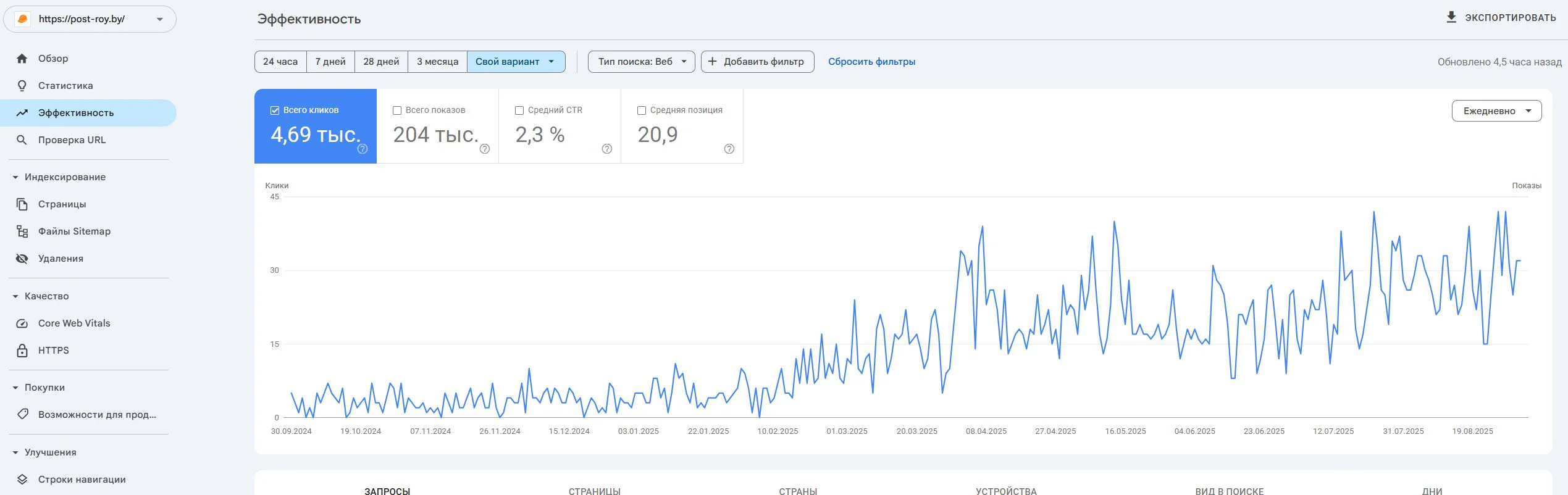
Post-Roy
A construction services website for industrial floors and screed. The project started from zero: no site, no domain, no digital reputation.
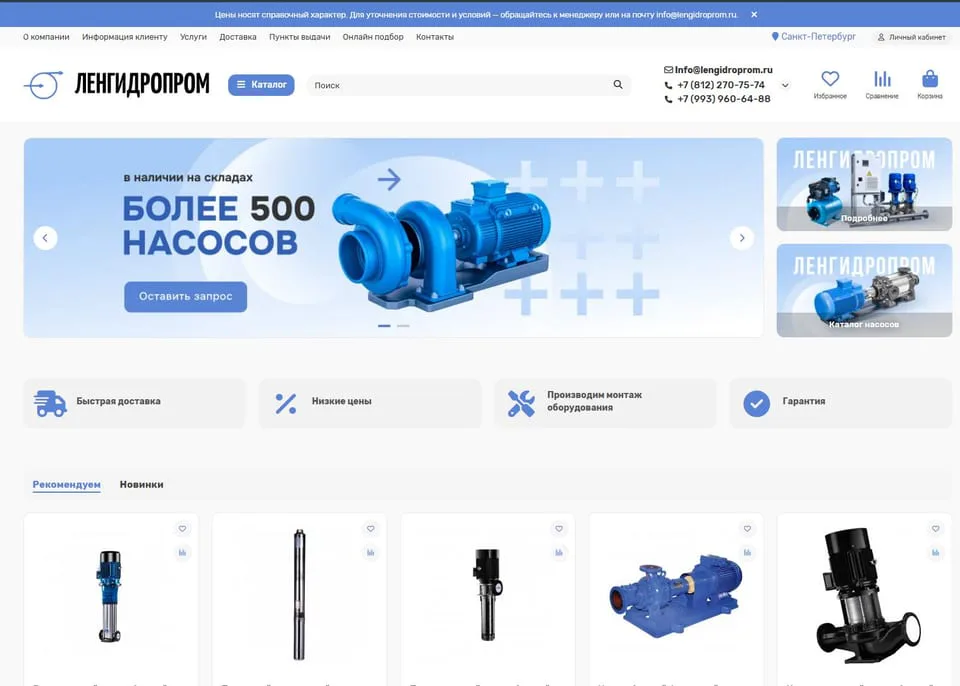
lengidroprom.ru
An OpenCart pumping equipment catalog: template redesign, bot filtering, silo architecture, trust factors and standardization of 3000+ product cards.
Personal
The expert who runs the work
No hiding behind a sales team: priorities, reviews, and straight answers—from strategy through reporting.

SEO Strategist
Pavel Barushka
Head of SEO @ Texode · Minsk / hybrid
SEO strategist with an engineering mindset. I lead projects from zero launch to scaling high-load platforms: JS/SPA, subdomains, multilingual and multiregional websites. Technical audits, indexation strategy, semantics and structured data are in my scope.
Frequently Asked Questions
Want a website that doesn’t need saving after launch?
Development with SEO invariants in code: URL architecture, speed, markup, and clean indexation from day one.
Free initial consultation included